
A: Dell used a four-year life for a typical business desktop in its customer-use model. A PC can last longer, but software support and repair costs may end its working life. Lenovo places server life at about five to ten years.
A slow computer can waste a few minutes. A failed server can stop a whole office. That difference explains why buying a PC and planning a server requires two different ways of thinking.
A PC serves one main user. It handles browsing, office files, design, accounting, sales, study, or gaming. A server serves computers, apps, or users across a network. It may store shared files, run a database, host a website, manage accounts, or keep backups.
To understand the core concepts of PCs and servers, ask one question: who needs the machine, and what must it keep running?
A PC gives one person direct control of software and files. The right type depends on location, workload, and future repair or upgrade needs.
Desktops give buyers the widest choice of PC Parts. A tower can hold a larger cooler, more storage, extra memory, and a separate graphics card.
A Desktop Computer PC suits office work, home use, gaming, design, and jobs that stay at one desk. It can give more performance per dollar than a laptop with similar parts because it has more cooling space and no built-in battery or screen.
Laptops combine the screen, keyboard, battery, storage, and computer in one unit. They suit people who travel or work in several places.
Many thin models have fixed memory and limited cooling. Check memory, storage, ports, battery service, and charger type before buying. A fast processor has little value if heat slows it down during long tasks.
A notebook is a lighter laptop built around mobility, battery life, and common work. Sellers may use “laptop” and “notebook” for the same device.
Focus on weight, screen size, keyboard comfort, battery service, webcam quality, and app needs. A notebook suits writing, meetings, web tools, and study. Heavy creative or engineering work needs stronger cooling and more memory.
A POS system records sales and may connect with a receipt printer, barcode scanner, cash drawer, payment terminal, and stock software.
Check port types, spill resistance, screen brightness, mounting, network access, and support for attached devices. A shop also needs a tested backup checkout plan because a failed terminal can stop sales.
Workstations handle heavy professional tasks such as 3D design, engineering models, large media files, science work, or local AI jobs. They may use high-core-count processors, large memory limits, professional graphics cards, and error-correcting memory.
A workstation earns its price through tested parts and long-term performance. Buy one when a normal PC slows down, crashes under large jobs, or cannot hold enough memory.
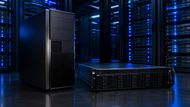
A server supplies data, software, storage, or processing to other devices. It may sit in an office, data center, or hosting facility. Cloud services still run on servers, but another company owns the hardware.
Server Parts share many names with PC Parts, yet designers select them for long-running time and shared work. Common parts include multi-core CPUs, large memory banks, ECC memory, several storage devices, RAID controllers, fast network cards, remote management, hot-swap bays, and two power supplies.
A file server needs safe storage and good network speed. A database server needs fast storage, enough memory, and strong backup. A virtual machine host needs many CPU cores and a large memory pool.
AI work may need GPUs or other processing cards. Lenovo separates web hosting, databases, virtual machines, file storage, app hosting, AI, streaming, and edge work because each workload puts pressure on different parts.
A Dedicated server gives one customer control of the whole physical machine. No other customer shares its processor, memory, or storage. It fits busy websites, private apps, large databases, regulated data, and workloads that need steady performance.
Hardware cannot serve users without software. A server operating system controls accounts, storage, network access, updates, security rules, and background services.
The software layer may include a web server, database, file-sharing service, backup tool, virtual machine platform, monitoring tool, and security software. Count operating system fees, database fees, user licences, backup storage, support, and admin time before approving the hardware.
|
Features |
Desktop (PC) |
Server |
|
Purpose |
Runs apps for one main user |
Supplies files, apps, data, or services to many users |
|
Performance |
Tuned for quick response and direct use |
Tuned for shared work, long jobs, and many requests |
|
Hardware |
Standard CPU, non-ECC memory, one power supply |
May use ECC memory, RAID, remote control, hot-swap storage, and spare power units |
|
Uptime |
Can shut down after work |
May need to run day and night |
|
Scalability |
Limited by case, board, and power supply |
Offers more memory, storage, network, and expansion options |
|
Reliability |
A part failure affects one user |
Fault protection reduces service loss for many users |
|
Cost |
Lower purchase and support cost |
Higher hardware, software, power, cooling, and admin costs |
|
Usage Type |
Personal work, office apps, design, gaming, study |
Hosting, shared storage, databases, accounts, backups, virtual machines |
Start with the PC. Choose the processor, memory, graphics, and storage for the hardest task you run each week. A home server can store family files, run a media library, host a private game, manage smart-home tools, or hold local backups.
Keep at least two copies of files you cannot replace, with one copy away from the main machine. Never treat the server as the only copy.
A small business needs reliable PCs and a clear reason for a server purchase. Cloud email and web software may remove the need for a server in a tiny office. A local server may still suit shared files, a business database, account control, local apps, camera storage, or fast access to large files.
List users, apps, data size, busy hours, backup targets, and recovery time. Then choose pc server and parts around that list. Ten office users with light file sharing need less hardware than a design studio moving large project files all day.
A large business should manage PCs as a fleet. Standard models make repairs, spare chargers, security settings, and staff support easier. Workstations can stay limited to teams that need them.
Map each server service to CPU, memory, storage speed, network traffic, security, backup, and recovery needs. Virtualization can run several virtual machines on one physical server, which separates jobs and makes better use of hardware.
AI processing now affects everyday PC buying. An AI PC may contain a CPU, GPU, and NPU. The NPU handles supported AI tasks with lower power use, while the CPU runs common work and the GPU handles large parallel jobs.
This setup can support video effects, local search, image work, security tools, and apps that process some data on the device.
Server demand continues around AI, virtual machines, databases, and edge processing. Buyers need to look past CPU speed. Memory capacity, storage delay, network speed, GPU space, power draw, and cooling can set the true limit.
Software support carries more weight in PC planning. Microsoft ended standard Windows 10 support on October 14, 2025. A 2026 purchase plan should check Windows 11 support, hardware support, security updates, and the life of each business app before spending money on older hardware.
Check replaceable storage, open memory slots, standard chargers, spare parts, firmware support, and vendor service. Buy enough headroom for known growth, then review the system each year.
Planning starts with the work, not a shopping list. Write down what must run, who uses it, how long an outage can last, how much data changes each day, and how fast you need it back after a failure.
Before approving a purchase, test the workload where possible. Record memory use, storage use, network traffic, busy-hour response times, and the size of daily backups. These numbers reveal weak points, support a sound budget, and stop buyers from guessing at processor names or oversized parts.
Check the weakest point before adding faster parts. A new CPU will not fix slow storage, weak Wi-Fi, full memory, poor cooling, or an overloaded network. Server planning must also cover power, cooling, rack space, noise, backup internet, battery support, monitoring, updates, and access rules.
Set a replacement plan before a breakdown forces one. Keep records for models, warranties, storage age, memory layout, software licences, and spare parts. Test backups by restoring files. A backup that has never passed a restore test may fail when you need it.
For details on processors, memory, storage, power supplies, cooling, motherboards, graphics cards, and replacement choices, read our Ultimate Guide to Computer Hardware Parts & Replacements in 2026.
PC & Servers planning works best when every purchase has a job. PCs should fit the user and their apps. Servers should fit the shared service, user count, workload, and cost of downtime.
Do not buy a server only because a business is growing. Do not avoid one only because cloud tools exist. Count users, measure files and apps, set an outage limit, and choose hardware and software that meet those facts. This keeps spending under control and makes later upgrades easier.
A: Dell used a four-year life for a typical business desktop in its customer-use model. A PC can last longer, but software support and repair costs may end its working life. Lenovo places server life at about five to ten years.
A: A small business needs a server when shared files, local software, account control, backups, speed, or data rules exceed what staff PCs and cloud tools can handle. A tiny team using cloud email, cloud storage, and web apps may not need an office server.
A: A workstation targets heavy-duty work such as engineering, 3D design, large media jobs, or local data work. A desktop PC targets office, home, study, and gaming use, though a high-end desktop can match a workstation in some tasks.
A: A server can run a desktop operating system and connect to a screen and keyboard, but it may make more noise, use more power, and handle display work poorly. Server hardware makes sense when it serves network users or runs background jobs.
A: A desktop gives strong performance, easier repairs, and more upgrade choices for the price. Users can replace the monitor, storage, memory, graphics card, power supply, and other parts without replacing the whole machine.
A: Server software receives requests from many devices and assigns processor time, memory, storage access, and network links to each session. Accounts and permissions control who can open files, run apps, or change settings.
A: You need dedicated servers when a website, app, database, or private system needs steady access to the full hardware, tighter control, or separation from other customers. A Dedicated Server also suits heavy traffic, special software, large storage, or firm security and performance rules.

Posted Sep 07, 2023

Posted Sep 07, 2023

Posted Sep 06, 2023
Posted Sep 05, 2023
Posted Sep 01, 2023

Posted Aug 30, 2023

Posted Aug 30, 2023